Language Advice Line
Contact one of our Language experts for:
- Personalised advice
- Locations
- Language courses
+44 845 130 4775 Book online

|
|
| Official Name: |
|
República de Chile |
| Capital City: |
|
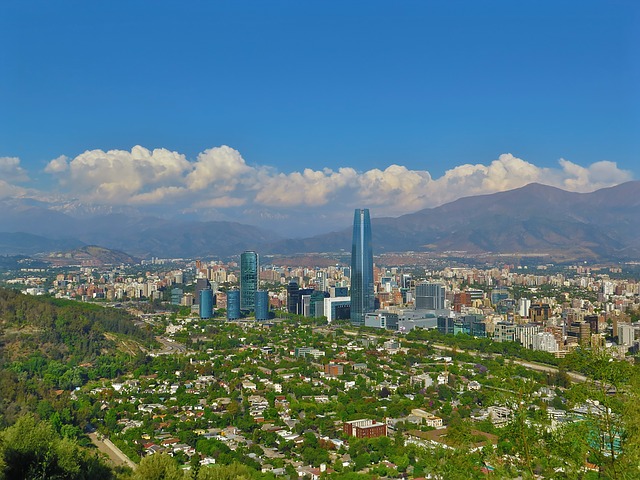
Santiago de Chile (pop. Approx 5 million) |
| Main Cities: |
|
Valparaíso, Viña Del Mar, Concepción, Temuco |
| Area: |
|
292,300 sq. miles |
Population: |
|
Approx. 16,1 million |
| Currency: |
|
Chilean Peso |
| Language: |
|
Spanish. There are also a few indigenous languages. |
|
“After God created the world, he stopped and puzzled at all the little pieces that were left. There were lush forests, clear lakes, inhospitable mountains, and fertile plains. He decided to stick them all together and place them right at the end of the world, to make the longest country on earth: Chile”
|
This legend, which Chileans tell with pride and wit, sums up how they see themselves and their country.
Geography
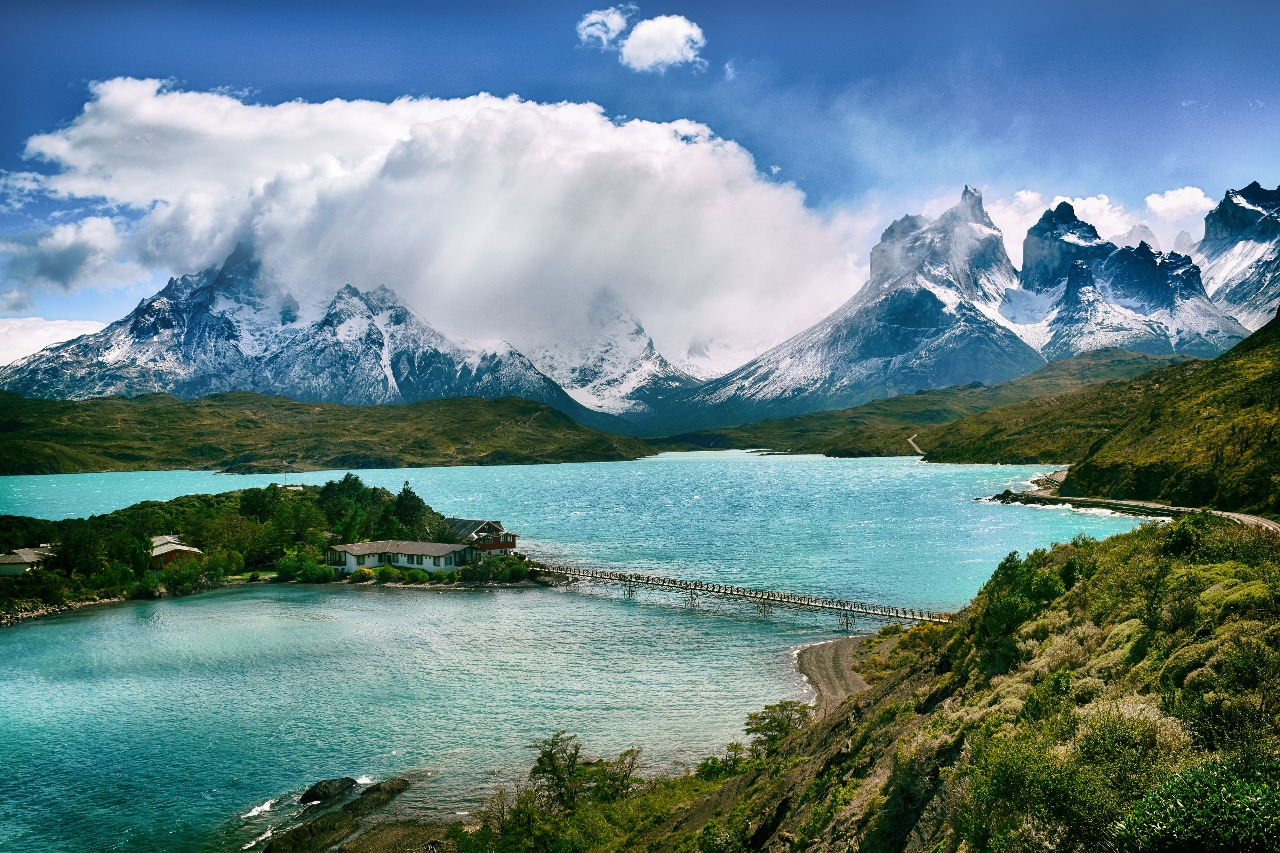
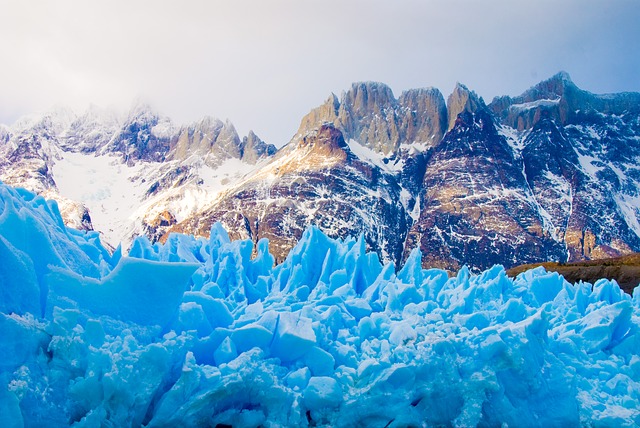
Chile is a long, narrow stretch of land that runs along much of the Pacific coast of South America. The terrain ranges from sea level to the great Andes Mountains, the highest point of which is 22,572 feet (6,880m). Only 20 percent of its territory is flat. Chile borders Peru in the north, and Argentina and Bolivia to the north and east, and has over 3,700 miles (6,000 km) of rugged coast along the west side. The country can be divided into four main areas: the Andes (commonly called the Cordillera) in the east; the lesser coastal range (the Cordillera de la Costa); the Central Region (the Zona Central); and Patagonia in the south.
Climate
Chile is locked between the sea and the Andes, which in the north acts as a barrier against the bad weather fronts coming from Argentina in the east, while further south it traps all the moisture from the Pacific, causing continuous heavy rain. In addition, the Chilean coast is exposed to the cooling effect of the cold Humboldt Current, which flows northward all the way to Ecuador and is responsible for the relatively moderate temperature of northern Chile and the typical ocean mist called Camanchaca .
Northern Chile has a very dry climate but, despite the latitude, temperatures are never very high. In the desert and at high altitudes, the sun can be extremely hot during the day and there are cold nights. In the Central Region the climate is temperate. It rains more and temperatures range from 50ºF (10ºC) to around 85ºF (30ºC). In the south, precipitation is more frequent and heavier, with low temperatures and only sporadic sunny days in summer. This is one of the stormiest and wetter regions on earth. In Patagonia, winters are very cold – 40ºF (4ºC) on average – with snow and frost. In spring and summer, strong westerly winds make the weather extremely changeable, bringing heavy rains from the ocean. As Chile is in the southern hemisphere, October to March (late spring and summer) is the best months to enjoy beautiful Chilean flowers, such as copihues (the national flower) and fucsias . February is the holiday month in Chile, so tourist areas should be avoided. The north can be visited throughout the year. In the Andean highlands the driest and sunniest period is in winter (from June to August).
Population
About 95 percent of the Chilean population is of white or white-Amerindian origin. This ethnic composition is the result of Spanish colonization, the subsequent extinction of a large part if the indigenous people, and finally the arrival of immigrants from Europe, the Middle East, and Asia. Despite this complicated history, Chileans feel and like to be thought of as a homogeneous society of European origins. Many value a fair complexion, and look down on an “indigenous” appearance. There is a collective denial of the multiethnic nature of Chilean society, where indigenous community are largely ignored and marginalized.
|
Top ^
|
|
| |
Defining the “typical” Chilean is quite a challenge. On the one hand, Chileans are reserved, family-oriented, Catholic, and conservative; and yet they are also fun loving, entrepreneurial, neoliberal and modern. And there is more: thought Chileans can be terribly unpunctual, they respect lines and are considered the “ ingleses de América Latina ”. Chile today defies any pigeonholing. It is a dynamic country, where contradictory values and forces, some inherited from the past and others global, combine or clash as the expression of a society that is redefining itself and become more modern.
Family
The family plays a central role in Chilean society. As in many other Latin countries, families have an overwhelming influence on the individual and remain a key reference point throughout one’s life. Chilean children and teenagers spend much more time with their parents and relatives than happens in Anglo-Saxon societies. Typically, families have their evening meal together, meet up with grandparents and other relatives almost every weekend, and also spend their holidays together. Relatives visit each other regularly if they live nearby. It is common simply to drop in without prior warning, and according to some Chileans, to refuse to entertain a visiting relative or miss a family reunion without a plausible excuse would cause great offence.
Chileans are usually extremely affectionate within the family. Family members kiss and hug each other and are particularly fond of children. Children, especially boys, are treated like little kings, and it is not difficult to spot the regalón , the spoiled or pampered child, usually the youngest in the family. Young people tend to stay at home until they get married or have to move to another town for work reasons. These close-knit family relations provide Chileans with a sense of security and comfort. They can, however, prevent them from exploring life on their own, as there is often no transition period between living with one’s parents and setting up home as a married couple.
Social classes
Traditionally, Chile has had limited social mobility. Despite the presence of a strong middle class, Chileans tend not to mix with people from other income groups. The upper class and wealthier middle class keep to themselves in the northern boroughs of Santiago and hardly ever go to the centre or to the busy downtown districts. Wealthy children attend exclusive schools and universities, and network only with their peers. At home, they might have a glimpse of a different society through the presence of nannies and other servants; however, mixing with children from other classes is the exception rather than the rule. The importance of class is reflected in the number of Chilean words used to describe someone’s social position. A few examples are cuico , pituco , esnob for upper-class people; roti , ordinario , flaite for the lower class. Class divisions are further strengthened by the strong family ties mentioned earlier. A Chilean friend admits that family pressure can prevent one from socializing or marrying outside one’s milieu.
Since the 1990s Chilean society has become more fluid. Improved education, economic growth of the middle class and the emergence of a new group of wealthy Chileans. While the middle class is becoming more open and inclusive, economic success is still not enough to reach the top of the social ladder. Exclusive clubs and insider circles are the ultimate barrier to newcomers who do not enjoy the privilege of a prestigious family tree. |
|
Top ^
|
|
|
The above extract is kindly provided by Culture Smart! the essential guide to customs & culture. The 168-page guide retails at £6.95 + P&P and is available directly from Kuperard, the publishers of Culture Smart! guides.
CultureSmart!Consulting in conjunction with Cactus Language Training creates tailor-made seminars and consultancy programs to meet a wide range of corporate, public sector, and individual needs. Find out more at www.cactuslanguagetraining.com.
Top ^ |
|
|