Language Advice Line
Contact one of our Language experts for:
- Personalised advice
- Locations
- Language courses
+44 845 130 4775 Book online

|
|
| Official Name: |
|
República Portuguesa |
| Capital City: |
|
Lisboa (Lisbon) |
| Main Cities: |
|
Porto, Coimbra, Faro |
| Area: |
|
35,580 sq. miles (92,152 sq. km) |
Population: |
|
10,3 million |
| Currency: |
|
Euro |
| Language: |
|
Portuguese |
|
Geography
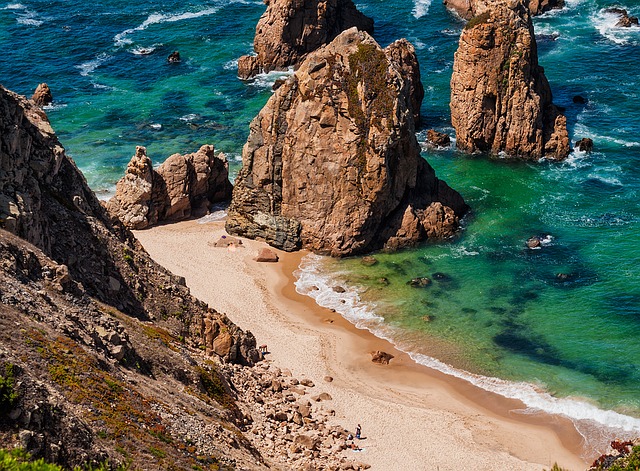
Portuguese territory is divided between continental Portugal, at the westernmost tip of the Iberian Peninsula, and the archipelagos of the Azores and Madeira, in the Atlantic Ocean. Continental Portugal shares borders with Spain to the north and east, while the western and southern extremities dive directly into the Atlantic.
On the continent, Portugal spans 349 miles at its longest and 135 miles at its widest, making it a small rectangle that can be quite easily covered in a short amount of time. The frontiers are partly defined by the four major rivers, the Minho, and the Douro in the north, the Tagus and the Guadiana in the south. Elsewhere they are marked by mountain ranges.
Madeira is situated 566 miles southwest of Lisbon and is comprised of the islands of Madeira and Porto Santo which make up the Funchal district. The Azores archipelago lies 769 miles west of Lisbon and is formed by the Horta, Angra do Heroỉsmo, and Ponta Delgrada districts, with a total of nine islands.
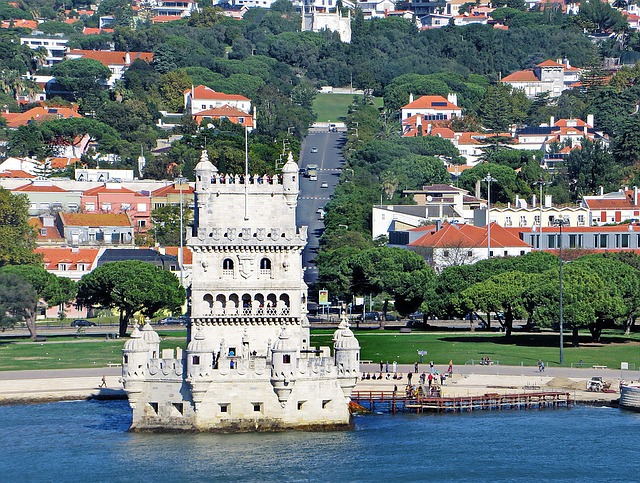
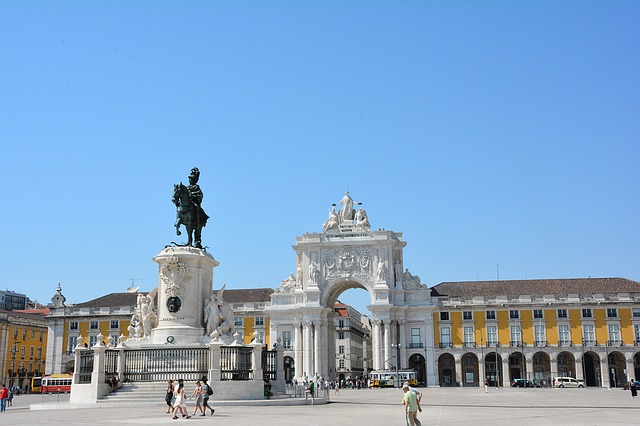
The capital, Lisbon, is situated on the coast more or less in the middle of the national territory, at the mouth of the Tagus River.
Climate and weather
Despite is relatively small expanse, continental Portugal’s climate varies significantly from region to region, with pronounced differences in temperature between the north and the south as well as between the coast and the territories further island. Generally, however, the climate is mild, with daily temperatures ranging between 46,4ºF and 64,4ºF in the winter and 60,8ºF and 86ºF in the summer.
As with almost everything to do with Portugal, the climate can be divided into north, center, and south. The north registers higher precipitation with more rain and lower temperatures, whereas south of the Tagus River, due to the Mediterranean influence, the winters are shorter and drier and the summers extremely hot. The climate in the center, of course, lies somewhere in between. It is inland in the mountainous regions, however, where the climate ranges between bitter cold and snow in the winter and a parched, overbearing heat in the summer. The Madeira Islands boast a typically Mediterranean climate, with mild temperatures and conditions all year-round, whereas the Azores, while also mild, have a more bracing maritime climate and an abundance of rain.
Regions
Though culturally the Portuguese divide their country into north, center, and south, Portugal is divided into eight geographic regions, plus The Madeira and Azores archipelagos, which are, for administrative purposes, each considered “autonomous regions”: entre Douro e Minho, Trás-os-Montes e Alto Douro, Beira Interior, Beira Litoral, Estremadura e Ribatejo, Lisboa e Setúbal, Alentejo, Algrave.
|
Top ^
|
|
| |
| Portuguese society is close-knit and relationship based, with the family as its core. Whether at work or play, personal contact is key. The Portuguese work to live, rather than vice versa, and any excuse to socialize and have fun is welcome. Yet while their capacity for pleasure is boundless, they also revel in nostalgia and cultivate fatalism. Open and friendly once at ease, they can be suspicious and defensive if feeling insecure or on unfamiliar terrain. Once you become accustomed to these contradictions, you will find them to be warm, out going people who are always ready for fun and celebration.
Sociability
The Portuguese are at heart a sociable and friendly culture. First and foremost comes family, and after family come friend. Friendships tend to be strong and usually last a lifetime, but this circle of friends is restricted and treated as family. Since the Portuguese love to socialize (at the local café, at work, at clubs), acquaintances are numerous and are also treated warmly, but these relationships are kept on a more superficial level, with the various social circles usually kept separate. The Portuguese are curious and eager to please, however, and when interest is shown toward someone, it is genuine. Be open and communicative and they will make it their personal mission to ensure you enjoy yourself.
Family
In the not-so-distant past it was common for traditional Portuguese families to be quite large, often having five or six children. As in the rest of Europe, however, over the last couple of decades Portugal has experienced a decline in its marriage and birth rates. Statically, the average Portuguese family consists of 2,8 members, with 1,42 children to each women, yet the concept of family has changed little. Though a typical modern Portuguese home may consist of two parents and often only one child, the idea of the extended family is still very much alive. When a person refers to their family, they are not only considering their parents and siblings, but are also including a colourful array of grandparents, godparents, aunts, uncles, and cousins. Though this panoply of relatives does not necessarily reside under the same roof, family members generally live as close together as possible and maintain daily contact.
Top ^ |
|
|
|
The above extract is kindly provided by Culture Smart! the essential guide to customs & culture. The 168-page guide retails at £6.95 + P&P and is available directly from Kuperard, the publishers of Culture Smart! guides.
CultureSmart!Consulting in conjunction with Cactus Language Training creates tailor-made seminars and consultancy programs to meet a wide range of corporate, public sector, and individual needs. Find out more at www.cactuslanguagetraining.com.
Top ^ |
|
|